Not All Cable Lugs Are Crimped in the Same Way
Achieving a reliable crimped connection does not depend solely on using the correct tool. It is equally important to select a crimp profile suitable for the cable lug and wire.
Cable lugs differ in design, which means that the same crimping method is not suitable for every application. The choice of crimp profile depends on the cable lug design, wire type and the manufacturer's instructions. Selecting the correct crimping method helps ensure that the connection meets the required mechanical and electrical specifications.
Comparison of hexagonal crimping and indent crimping
| Feature | Klauke: Hexagonal Crimp | Klauke: Indent Crimp |
| Key advantage | Most commonly used crimp profile | Does not require separate crimping dies |
| Suitable for | Cu cable lugs to DIN 46235 (e.g. Klauke R tubular cable lugs) and Al cable lugs to DIN 46329 | All Cu cable lugs (including Klauke R, SG, F tubular cable lugs and solderless terminals), as well as certain Al cable lugs, in accordance with the manufacturer's instructions |
| Crimping method | Crimping is carried out using crimping dies compatible with the cable lugs. Separate crimping dies are used for Cu and Al cable lugs. | No separate crimping dies are required. The same fixed crimping head is suitable for multiple cross-sections and both Cu and Al cable lugs, within the limits specified by the manufacturer. |
Hexagonal crimping is the most commonly used crimp profile
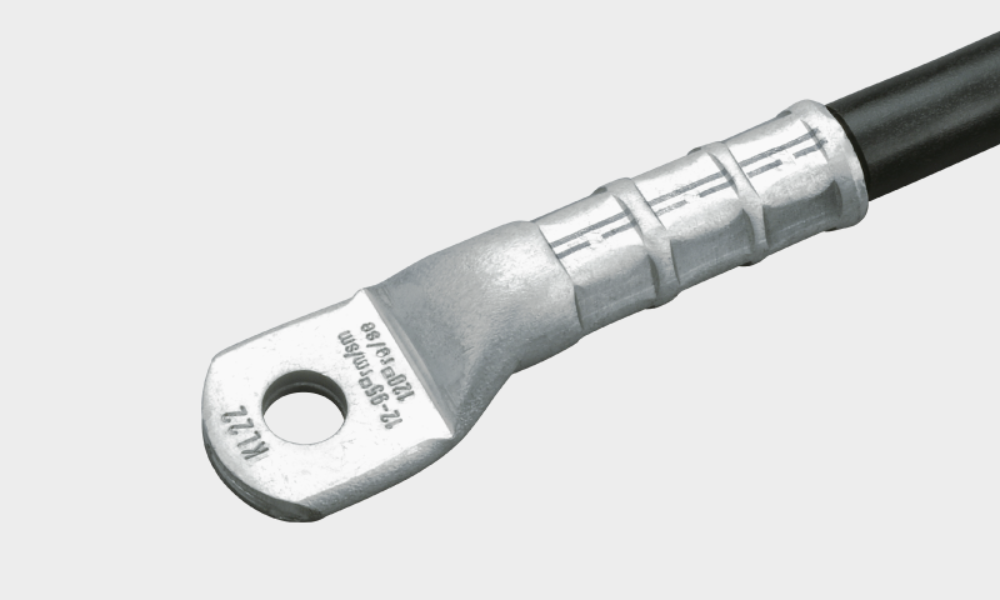
Hexagonally crimped aluminium cable lug.
Hexagonal crimping is the most commonly used crimp profile for cable lugs and connectors. It is suitable for both copper and aluminium cable lugs. It is typically used for crimping copper cable lugs to DIN 46235 and aluminium cable lugs to DIN 46329.
During crimping, the force is distributed evenly, pressing the wire strands tightly together to create a large contact area. The result is a mechanically strong and reliable connection.
The required crimp profile also depends on the type of cable lug. For example, Klauke R tubular cable lugs to DIN 46235 (6–400 mm²) require a different crimp profile from Klauke 90R tubular cable lugs (0.75–6 mm²). The 90R cable lugs are suitable only for indent crimping, whereas R cable lugs can be crimped using several different crimp profiles in accordance with the manufacturer’s instructions.
Indent crimping makes work easier
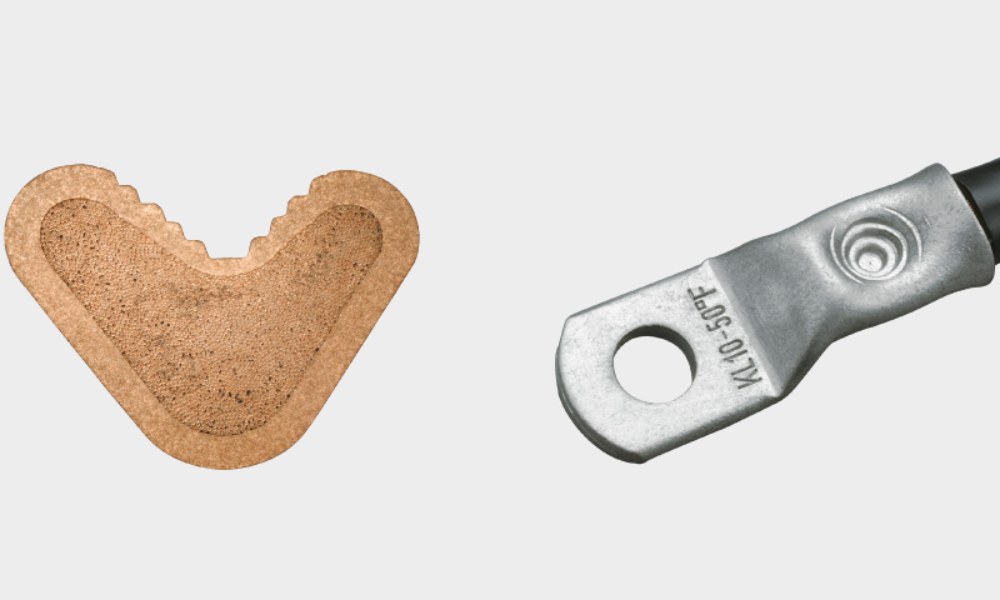
Indent-crimped F cable lug (without crimping dies) and its microsection (Class 5 wire).
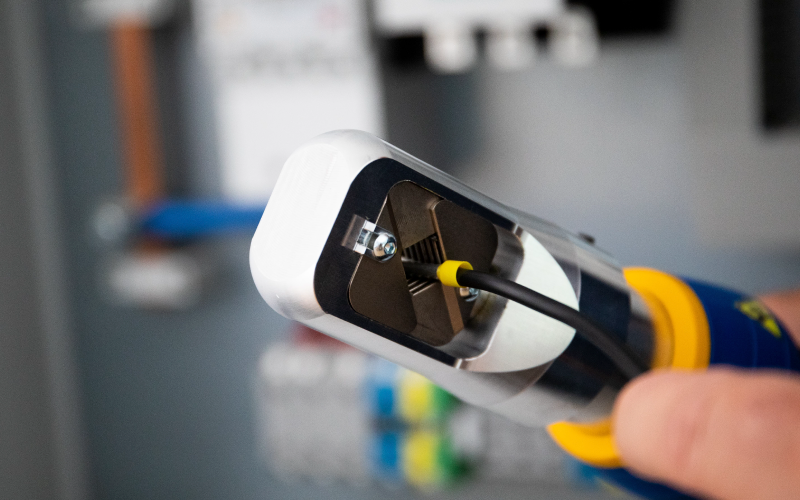
Indent crimping can be carried out with or without crimping dies. A key advantage of indent crimping without separate dies is its ease of use, as no cross-section-specific crimping dies are required. The same crimping head is suitable for several wire cross-sections and cable lugs. A complete crimp is ensured because the tool stops only when the required degree of compaction has been achieved.
For specialised applications, the less common quad-point indent crimp is also available. Its advantage is the centric distribution of the crimping force and simple processing.
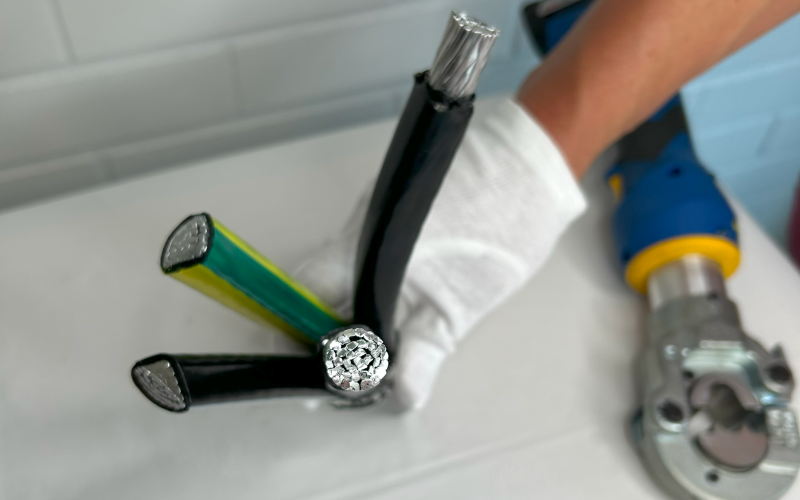
Indent crimping without separate dies can be used for standard-type, SG and F cable lugs, solderless terminals, and aluminium and Al/Cu cable lugs in accordance with the manufacturer’s instructions. When indent crimping is carried out with dies, the appropriate crimping dies are selected for the application. This method is suitable, for example, for solderless terminals and cable lugs designed for fine-stranded wires. The crimp profile must always be selected according to the cable lug, wire and the manufacturer’s instructions.
The crimping sequence also affects the result
In addition to the crimp profile, the correct crimping sequence is essential for achieving a reliable connection. Crimping a tubular cable lug always starts at the palm end and proceeds towards the wire. With a connector, the first crimp is made in the centre, after which crimping continues towards the cable. The first crimp secures the wire in position, while the following crimps elongate the cable lug towards the wire insulation. This maximises contact between the cable lug and the wire and prevents a void from remaining at the end of the cable lug barrel. The crimping process must always be completed to ensure a complete crimp.
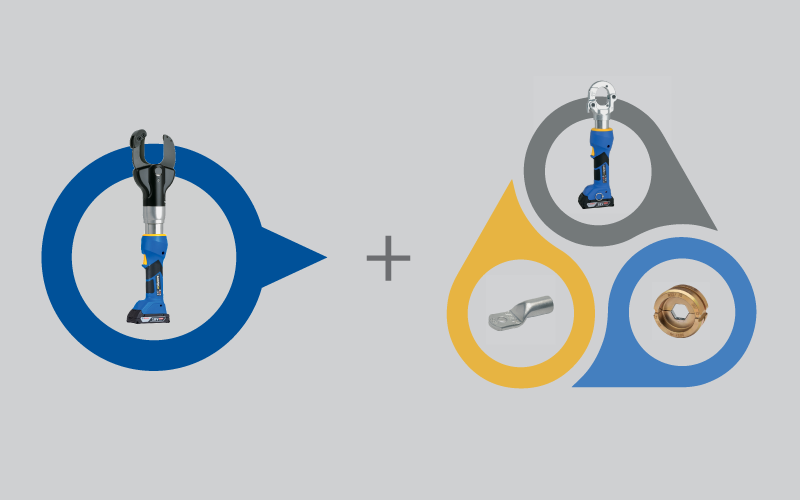
Before crimping, ensure that the wire has been stripped to the correct length and cleaned where necessary, and that the crimping dies are clean and undamaged. The manufacturer also recommends using cable lugs, crimping dies and tools from the same system to ensure that all components are compatible.